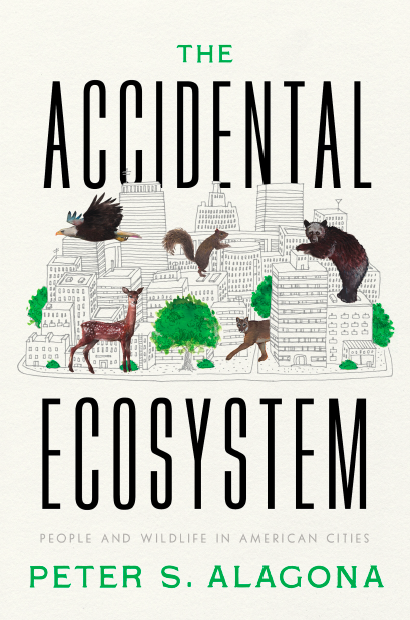
The Accidental Ecosystem
By Jane Kim @ InkDwell
In 2022, the University of California Press published my second book, The Accidental Ecosystem: People and Wildlife in American Cities, which tells the story of how American cities went from having little wildlife a century ago to filling, dramatically and unexpectedly, with wild creatures. Today, American cities have more wild animals of more kinds living in them than at any time in at least the past 150 years. Why have so many cities—the most artificial of all Earth’s ecosystems—grown rich with wildlife, even as many wildlife populations have declined in more natural habitats? And what does this paradox mean for cities, people, wildlife, and nature on our increasingly urban planet?
The Accidental Ecosystem argues that although cities were not built with the goal of attracting wild animals, they have become rich wildlife habitats, or even weird wildlife refuges, because of decisions people made often decades ago and mostly for other reasons. The recent explosion of wildlife in American cities is one of the greatest ecological success stories since the dawn of conservation, but it happened largely by accident. Only over the past generation have scientists, conservationists, planners, and civic leaders in North America and elsewhere begun to study, appreciate, and grapple with the reality of cities as rich ecosystems housing diverse, multispecies communities. Yet bringing these animals back was the easy part. The hard part, and the real work ahead of us, is living with them now that they’re here.