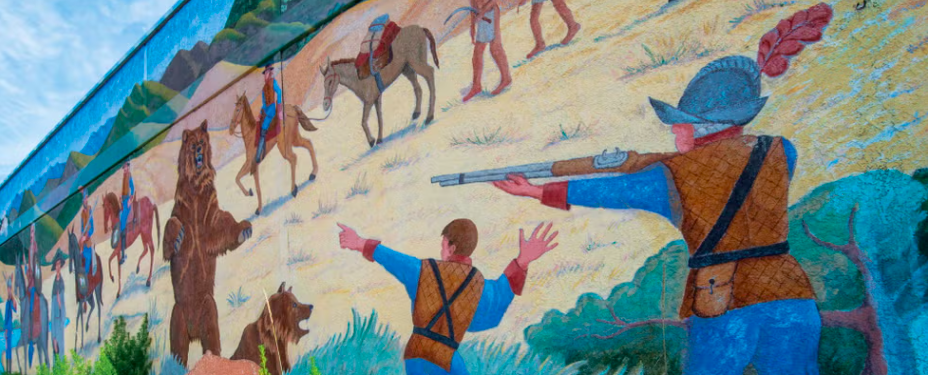
Start With A Bear
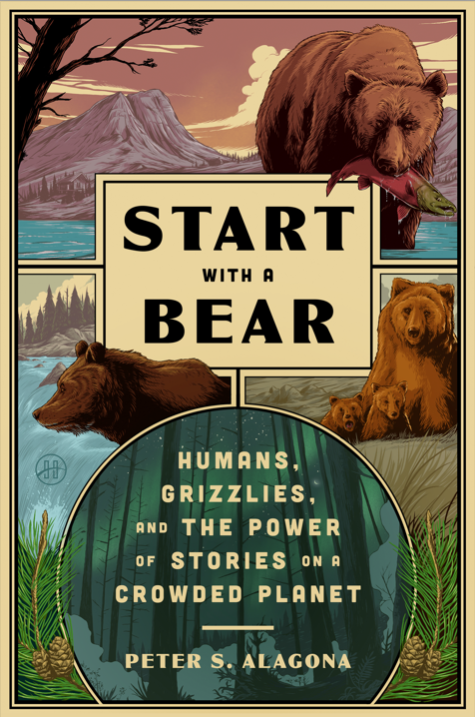
In November 2026, HarperCollins will publish my third book, Start With a Bear: Humans, Grizzlies, and the Power of Stories on a Crowded Planet. In it, I argue that although we’re accustomed to thinking about conservation in terms of science, law, politics, and management, there is a more fundamental level on which humans interact with other species and the rest of nature. Humans are storytelling animals whose relations with other animals depend on the stories we tell—both about them and about ourselves.
Start With A Bear highlights the importance of stories in wildlife conservation by telling a new history of grizzly bears in California. A decade of research by the California grizzly network revealed that almost everything we once thought we knew about grizzly bears—when they arrived, where they lived, what they ate, how big they grew—in California was wrong. My colleagues and I eventually realized that we weren’t just filling in gaps or correcting the record; we were telling a whole new story, and adding chapters to it.
But the book goes much further. To understand the what happened to California’s missing mascot, and whether grizzly bears could ever return to the Golden State, the book takes readers on a tour across Europe and North America to explore the narratives that have shaped our two species’ shared histories.
Start With A Bear’s chapters each highlight a story that I believe is essential for understanding the place of brown (grizzly) bears in the modern world. These include stories that portray the brown bear as a ferocious apex predator, a foe of Indigenous people, a species doomed to decline, a wilderness recluse, a classic monster, a case study in wildlife conflict and coexistence, a vehicle for Indigenous cultural revival, a symbol of the dysfunction that afflicts modern bureaucratic governance, and finally, in the epilogue, as a frontier of rewilding.
Together, these stories suggest that the brown bear is unique. It is not only the world’s most storied large wild animal; it is also, paradoxically, both the most intensively studied and the most consistently misunderstood. Yet these stories also show that the brown bear is representative. As the world’s largest and most widespread terrestrial omnivore, and one of its most charismatic species, the brown bear crystallizes the essential problem facing conservation in the twenty-first century: how to craft a new story that enables people to live safely, honorably, sustainably, and compassionately with wild animals on a crowded planet.
If we want a better future for both people and wildlife, the book concludes, then we need a new era of better storytelling. And when crafting new stories, there is no better place to start than with a bear.